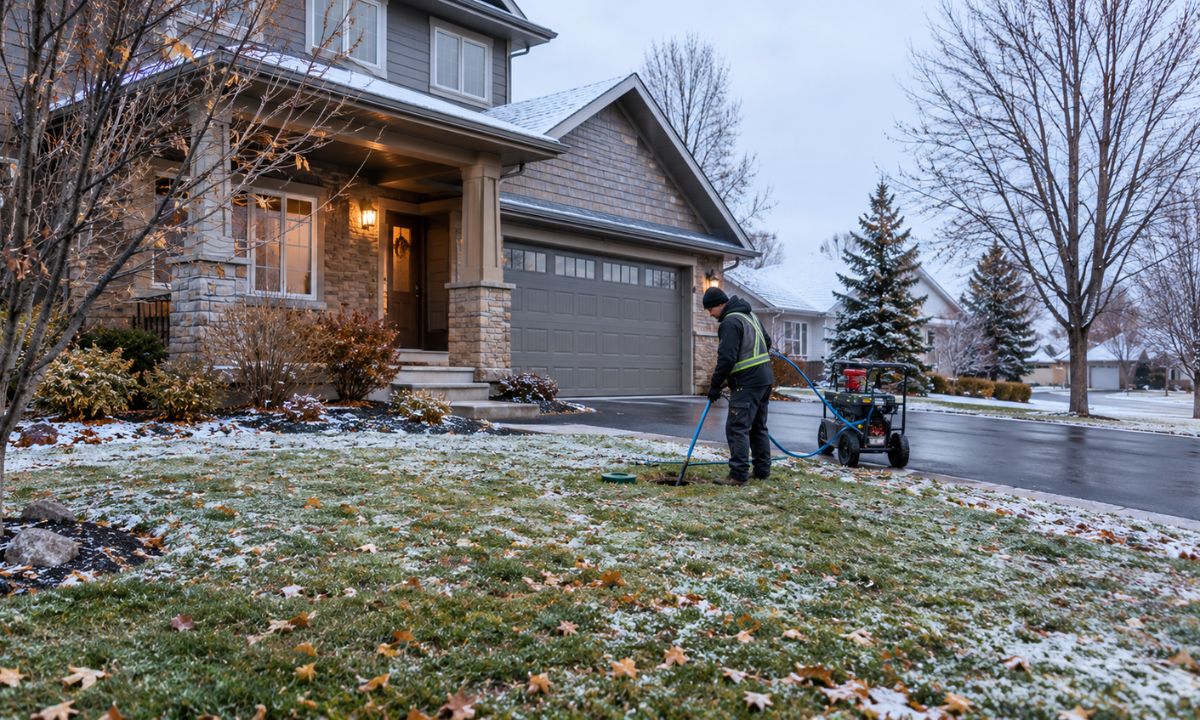
The time has come to consider one pivotal home care task: blowing out the sprinkler system, as the rainfall cools and frost begins to sneak into the cast.
Indeed, though it seems complicated, it’s only the process of using compressed air to remove water from your underground irrigation lines. And why? Because when water freezes, it expands, which can beget your sprinklers to malfunction, fittings to burst, and pipes to resolve pipes. Repairs can be precious, and a straightforward shindig can constantly help them entirely.
You can secure your system and save plutocrats in the long run by knowing the fundamentals, anyhow of whether you are a do- it- yourselfer or would rather leave it to the professionals like SOS Exteriors in Lethbridge.
What Does “ Blow Out a Sprinkler System ” Mean?
Blowing out the sprinkler system is pushing out any leftover water by pumping air through the irrigation lines. When temperatures drop, indeed, bitsy quantities of water that have been left before might indurate and harm the system.
Consider it analogous to blowing air through a straw to get relief of any remaining liquid. This is a large- scale use of the same idea, especially in Lethbridge.
What You’ll Need
A few essential tools are required if you intend to do it yourself:
An air compressor (for domestic systems, ideally 50–80 PSI)
Adapters or quick-connect connections to link your compressor to the system
Safety comes first, so protect your eyes!
A basic understanding of your sprinkler zones Before starting, double-check your system’s manual for specific pressure limits — too much air pressure can cause damage.
Step-by-Step: How to Blow Out Sprinkler System
Let’s go over each phase of the procedure. Take your time, and it’s always safe (and wise) to call an expert like SOS Exteriors if something seems hard.
1. Turn the water supply off.
Find the blow out sprinkler system’s main water valve and fully shut it off. This guarantees that while you’re working, no further water will enter the lines.
2. If you have manual drain valves, open them.
Manual drains are a feature of several systems. Before running the compressor, open them to allow water to naturally drain away.
3. Connect the air compressor.
Locate the blowout port, which is often located close to the main shut-off valve or backflow preventer. Make use of the proper fitting to connect your air compressor.
For PVC pipes, set your air pressure to about 50 PSI; for polyethylene pipes, set it between 60 and 80 PSI. Never go over the restrictions set by the manufacturer.
4. Work Zone by Zone
The zone that is farthest distant from the compressor connection should be used first. Turn on the zone manually (using your control box or valves), and slowly start the air compressor.
The sprinkler heads will be spouting water, which is what you want! Allow it to run for one to two minutes per zone, or until only mist or air emerges.
After that, switch off that zone and proceed to the next one. Continue doing this until every zone has been cleared.
5. Don’t Overdo It
Running compressed air through dry lines for too long can cause friction and heat damage. Stop once you see just air — there’s no benefit in continuing.
6. Disconnect and Finish Up
After every zone has been emptied, disconnect your compressor and remove any remaining system pressure.
Lastly, to allow any remaining water to escape, make sure all drain valves are open.
Common Mistakes to Avoid
Although the procedure seems straightforward, there are a few things to be aware of:
Using excessive air pressure: This may harm fittings and valves.
Ignoring a zone: A single zone that is overlooked can freeze and require costly repairs.
Not turning off the water: Before turning on, make sure your main valve is off.
It is best to be cautious than sorry when it comes to wearing eye protection because pressurized air can cause particles to fly.
When to Call the Professionals
While blowing out the sprinkler system is a do-it-yourself project, it’s not always the greatest option. Hiring an expert makes perfect sense if you’re not sure about your setup, don’t have a big enough air compressor, or simply want peace of mind.
SOS Exteriors in Lethbridge can help with that.
Their staff has the necessary equipment, know-how, and tools to guarantee that your sprinkler system is fully winterized in a safe and effective manner. They take care of both business and residential systems, saving you the trouble and danger of doing it incorrectly.
Additionally, SOS Exteriors will check your blowout for leaks, damaged heads, and other hidden problems so that you’re prepared for spring.
A Quick Checklist Before You’re Done
Turn off main water supply
Open drain valves
Connect compressor and set proper pressure
Blow out each zone (1–2 minutes max)
Disconnect compressor and open all valves
Double-check no zones were skipped
Following this checklist helps ensure your sprinkler system stays safe and ready for next season.
Conclusion: Protect Your Investment Before Winter Hits
One of those easy seasonal tasks that can eventually save you a lot of money and timesolicitude is blowing up your sprinkler system. It’s a pivotal step in securing your irrigation and geography investment, whether you want to perform it yourself or hire an expert.
Get in touch with SOS Exteriors right down if you want to avoid the trouble and be sure the design is done rightly. To keep your system safe throughout the downtime, their knowledgeable staff offers reliable, nicely priced sprinkler shindig services.
Do n’t stay for inducting temperatures to beget damage — schedule your sprinkler shindig with SOS Exteriors now and enjoy peace of mind knowing your system is in good hands.
Ask Us Anything About Blowing Out Sprinkler Systems